Children rarely learn a language by being told to study. They learn it by playing, singing, cooking, arguing about whose turn it is and laughing at silly voices. These Urdu learning activities for children are designed to fit into ordinary family time in the UK. They need little preparation, no special equipment and no perfect Urdu.
Key takeaways
- Play-based Urdu learning activities for children build vocabulary and confidence without pressure.
- Short and regular beats long and rare. Pick one or two Urdu learning activities for children a week.
- Adapt for age: younger children enjoy movement and songs, older children enjoy games, challenges and creativity.
1. Urdu “I spy”
Say “I spy with my little eye” in English, and then give the clue in Urdu: “something that is لال (laal, red)”. Children can guess in English at first and later in Urdu. Good for: colours, objects, listening. Ages: 4 to 9.
2. Alphabet scavenger hunt
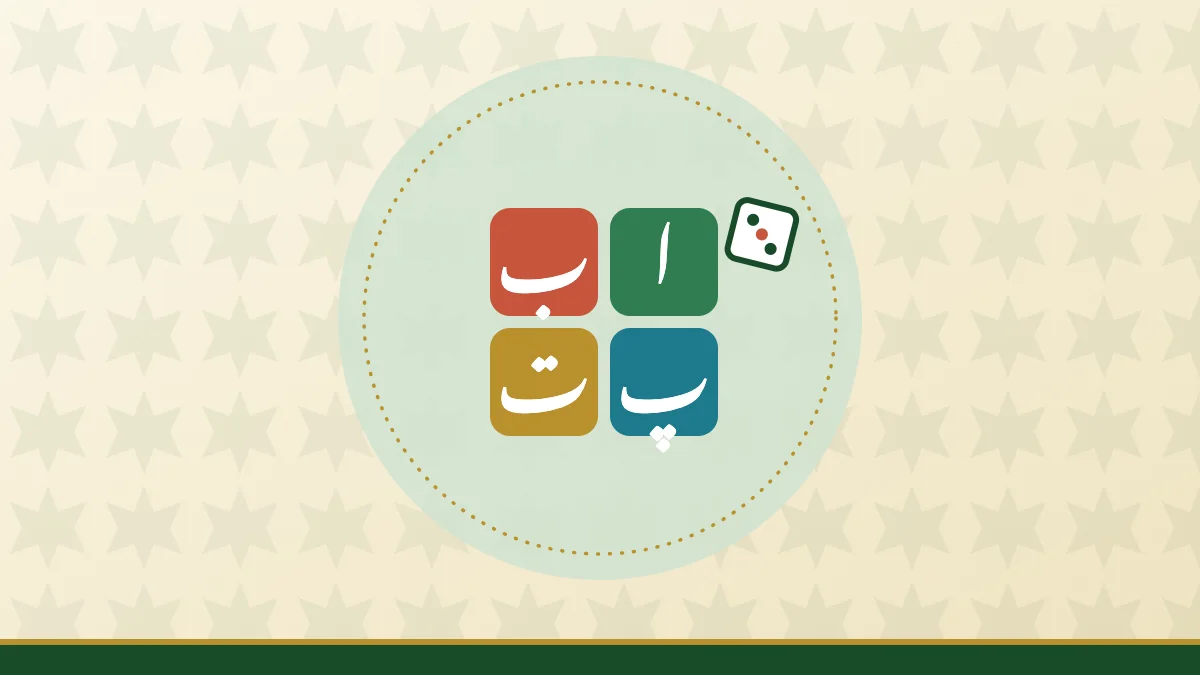
Choose a letter such as ب (bay) and hunt for it around the house, on packaging, books or signs. Older children can find words that start with the sound. Good for: letter recognition and sounds. Ages: 5 to 8.
3. Cook together in Urdu
Cooking makes language physical and tasty. Make fruit chaat or a simple lassi and name each ingredient and action in Urdu: wash, cut, mix, taste. Our guide to Pakistani food traditions has ideas for recipes and conversation. Good for: vocabulary, instructions, family connection. Ages: 5 to 12.
4. Make a picture dictionary
Fold sheets of paper into a small book. Each page has one word in Urdu script, a picture and the English meaning. Add a new page each week. Good for: reading, writing, memory. Ages: 6 to 12.
5. Songs and rhymes
Many families know traditional rhymes from their own childhood. Sing them with your child, add actions, and record a short video to share with grandparents. Learning a rhyme by heart is a great way to absorb rhythm and sentence patterns. For more, read Urdu stories, poems and rhymes for children. Good for: pronunciation, rhythm, memory. Ages: 4 to 9.
6. Board games with an Urdu twist
Play snakes and ladders and count in Urdu: ایک (ek), دو (do), تین (teen), چار (chaar), پانچ (paanch), چھ (chhe). Play bingo with picture cards, or Go Fish where players must ask in Urdu. Good for: numbers, turn-taking phrases, quick recall. Ages: 5 to 12.
7. The Urdu-only teddy
Choose a toy that only “understands” Urdu. Children must explain things to it in Urdu, which is less intimidating than speaking to an adult. Parents can do the voice, and the toy can ask questions: “Who are you? What do you like to eat?” Good for: speaking confidence. Ages: 3 to 7.
8. Draw and label
Draw a picture of your family, your house or your favourite animal and label each part in Urdu. Older children can write a sentence. Good for: vocabulary and writing. Ages: 5 to 10.
9. Voice messages for grandparents
Ask your child to record a short message in Urdu for a grandparent or relative: “السلام علیکم nani, today I went to the park.” Receiving a reply makes the effort feel worthwhile. See helping children speak Urdu with their grandparents. Good for: purposeful speaking. Ages: 4 to 12.
10. Play shop
Set up a pretend shop (دکان, dukaan) with household items and price tags. The shopkeeper and customer use Urdu greetings and numbers: “How much is this?” “Please” and “Thank you”. Good for: everyday conversation, numbers, politeness. Ages: 4 to 9.
11. Treasure hunt with Urdu clues
Hide a small treat and write clues in simple Urdu, such as “look near the کتاب (kitaab, book)”. Older children can write clues for you. Good for: reading, instructions, excitement. Ages: 6 to 12.
12. Action games
Use short commands in Urdu for a game like “Simon says”: بیٹھو (baitho, sit), کھڑے ہو جاؤ (khare ho jao, stand up), تالی بجاؤ (taali bajao, clap). Swap roles so your child leads. Good for: listening and response. Ages: 3 to 8.
How to choose Urdu learning activities for children
- Start with what your child already enjoys. A football-mad child may love counting goals in Urdu. A budding artist may prefer drawing and labelling.
- Keep the language level a little above what your child can say. They should stretch but not be lost.
- Repeat favourites. Children like routine. The same game with new words is better than a new game each time.
- Stop while it is still fun. Ending on a high makes your child want to come back.
If you need a longer plan beyond these Urdu learning activities for children, read our practical guide to teaching your child Urdu at home.
Frequently asked questions
How often should we do these Urdu learning activities for children?
Two or three short sessions a week is a good start. If your child enjoys it, make it a daily habit.
What if my own Urdu is not strong?
Use the activities as a chance to learn together. Ask a relative for help with pronunciation and keep a notebook of new words.
My child gets bored quickly. What should I do?
Shorten the activity, add movement or let your child lead. Boredom is usually a signal to change the format, not to stop altogether. See how to keep children motivated while learning Urdu.
Make Urdu part of a weekly routine
Our Sunday classes in Slough include speaking, reading, writing, storytelling, poetry and creative activities for children aged 5 to 12.
Related reading
- Introduce Urdu into your child’s daily routine
- Pakistani arts and crafts for children
- Pakistani heritage activities for children and families
Sources and further reading
- UCL BiLingo: research-based advice for UK parents raising bilingual children