For many families, the most painful language gap is the one at the dinner table: a grandmother who speaks mostly Urdu or another family language, and a grandchild who speaks mostly English. Each loves the other, and both feel they cannot say what they mean. If you want to help children speak Urdu with grandparents, small, regular steps can build the bridge. This guide offers practical ideas for families in the UK, whether grandparents live nearby, in another city or in Pakistan.
Key takeaways
- To help children speak Urdu with grandparents, a few well-chosen phrases, used often, matter more than a large vocabulary.
- Regular, short conversations beat occasional long ones.
- Grandparents can help by speaking slowly, asking simple questions and celebrating every attempt.
- Make the relationship fun, not a test.
Why help children speak Urdu with grandparents
For a grandparent, hearing a grandchild speak their language can mean a great deal. For a child, being able to talk with a grandparent without a translator opens doors to stories, advice, jokes and affection. It also shows children that the language is alive and valued. Read more about why in why family languages matter across generations.
First, understand the barriers
- Shyness. Children worry about making mistakes in front of someone they respect.
- Vocabulary gap. A child may know words for school and games but not for feelings or memories.
- Different languages. Some grandparents speak Punjabi, Pashto, Sindhi or another language at home, with Urdu as a second language. A few words in their own language can mean a lot.
- Distance. If grandparents live far away, calls can feel awkward or rushed.
- Fear of correction. If a child is corrected sharply, they may stop trying.
Knowing which barrier applies to your family helps you choose the right way to help children speak Urdu with grandparents.
1. Learn a few key phrases first
Choose five or six phrases to practise before each call or visit. Here is a starter set for talking to elders, using polite forms.
| Urdu | Sounds like | Meaning |
|---|---|---|
| السلام علیکم | Assalam-o-alaikum | Peace be upon you (a greeting) |
| آپ کیسے ہیں؟ | Aap kaise hain? | How are you? |
| آپ نے کھانا کھا لیا؟ | Aap ne khaana kha liya? | Have you eaten? |
| مجھے کہانی سنائیں | Mujhe kahaani sunaayein | Please tell me a story |
| شکریہ | Shukriya | Thank you |
| خدا حافظ | Khuda hafiz | Goodbye |
Practise them in the car or at breakfast beforehand. Many grandparents will respond with delight and may stretch the conversation further.
2. Use the family names
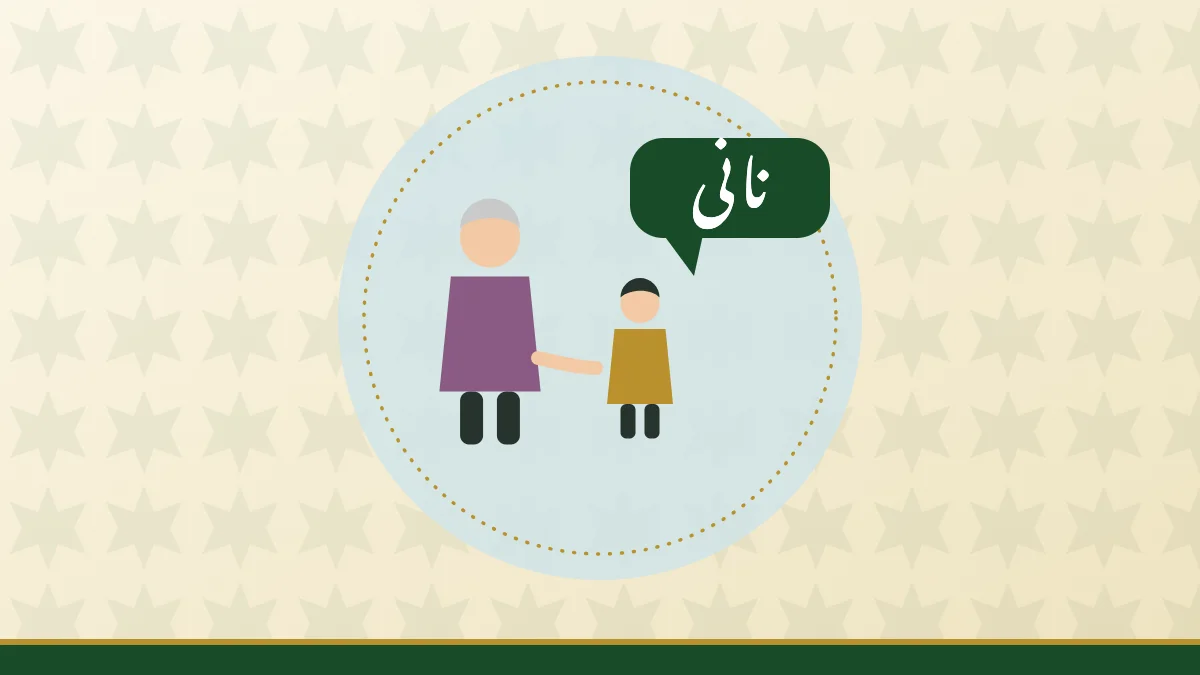
Children learn which word to use for each person: نانی (nani, maternal grandmother), نانا (nana, maternal grandfather), دادی (dadi, paternal grandmother) and دادا (dada, paternal grandfather). Using these names consistently is a small but meaningful habit.
3. Make calls short, regular and purposeful
A ten-minute call at the same time each week is better than a one-hour call every few months. Give each call a small purpose:
- Show and tell. The child shows something they made or a favourite toy and describes it.
- A question for grandparents. “What was your school like?” “What did you eat for Eid when you were little?”
- A story or rhyme. Ask the grandparent to share a short one, or have the child perform one they have learnt.
- A mini task. Ask the grandparent to teach one word or phrase each call.
If grandparents live in Pakistan, remember that Pakistan is usually four or five hours ahead of the UK, depending on whether British Summer Time applies. Weekend mornings in the UK are often afternoons there, which can suit both of you.
4. Do something together, not just talk
Conversation is easier when hands are busy. Cooking, gardening, sorting photographs, looking at a family tree or doing a puzzle gives language something to attach to. If grandparents live nearby, invite your child to help them with a simple task and ask the grandparent to name each step in Urdu.
5. Record voice messages and stories
Children can record short messages for their grandparents, and grandparents can reply. Voice notes remove the pressure of live conversation and can be replayed. Ask your child’s grandparents to record a story, a lullaby or a family memory. These can become treasured keepsakes. See Urdu stories, poems and rhymes for children.
6. Help grandparents help you
You can gently share tips with grandparents:
- Speak a little more slowly and use simple sentences.
- Ask questions that your grandchild can answer in a few words.
- Repeat what the child said in correct Urdu without making them feel wrong.
- Praise every attempt, even if it is only one word.
- Mix languages if needed. The goal is connection, not perfection.
It can also help if children teach grandparents a few English words, since two-way learning makes the relationship feel equal.
7. Let the language belong to both of you
Ask your child what they want to talk about, such as football, a favourite show or a game, and help them find the Urdu words. Ask grandparents to share what they enjoy. When children discover that Urdu is a way to share their own interests, motivation rises.
If your child will not speak: how to help children speak Urdu with grandparents gently
Avoid forcing your child to talk on the phone or in front of relatives. Pressure tends to increase anxiety. Instead:
- Let them listen first and join in when ready.
- Have them show something to the camera and let the grandparent talk.
- Praise gestures, smiles and short words.
- Try again another day.
For more on children who understand but do not speak, read helping British-born children learn Urdu.
When grandparents are no longer with us
Not every family has living grandparents or close contact with them. If this is your situation, you can still share their language and stories. Look at photographs, play recordings if you have them, cook their recipes and tell your child stories about them. Relatives and friends who speak Urdu can also act as language partners.
Frequently asked questions
My child’s grandparents speak Punjabi, not Urdu. What should we do?
Learn a few words of Punjabi together as well. Many families use both. The point is to honour the language that matters to the grandparents.
How long will it take before my child can chat?
It varies. To help children speak Urdu with grandparents, expect gradual progress: first greetings, then short exchanges, then longer conversations. Regular contact makes the difference.
Should I translate for my child on calls?
Try to give your child time to attempt first. Offer help only when they are stuck, and step back again quickly.
Find a friendly place to practise
Pak Roots Academy’s Sunday classes in Slough give children aged 5 to 12 regular opportunities to speak and enjoy Urdu with others.
Related reading
- Simple ways to introduce Urdu into your child’s daily routine
- Teach your child Urdu at home: a practical guide
- Raising bilingual children in the UK
Sources and further reading
- UCL BiLingo: research-based advice for UK parents raising bilingual children